
Weather and seasons
Plan for the place on that day: a Mostar afternoon, a Sarajevo evening and a mountain outing need different attention. Regional climate helps you pack, but the local forecast decides when a long walk or exposed outing belongs in the day.
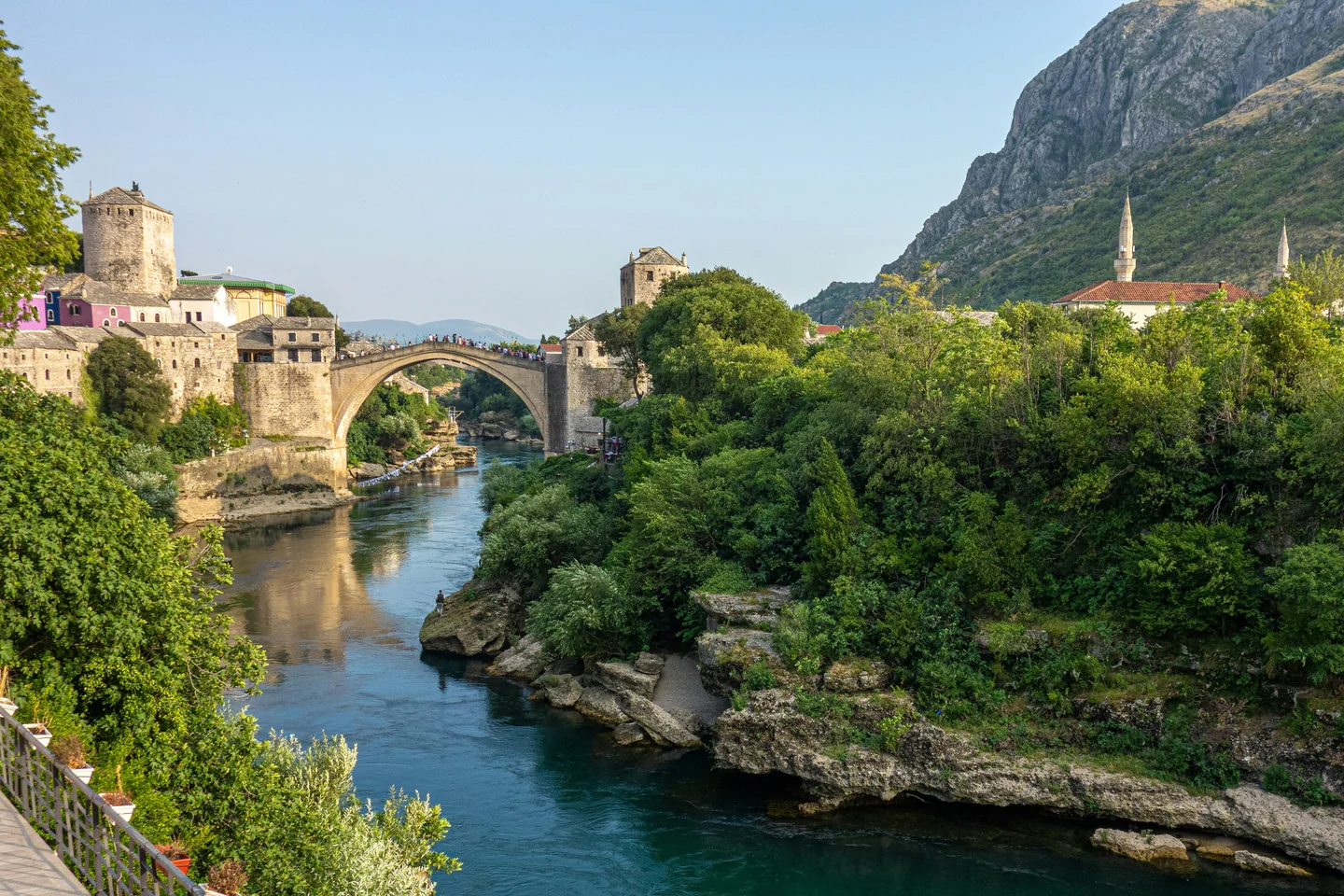
The country has more than one climate
Sarajevo, Mostar and Banja Luka make useful comparisons. Northern Bosnia has a continental pattern of warm summers and cold winters; the southern Neretva and Trebišnjica valleys have Mediterranean influence. In between, mountains and basins can change conditions over a short journey.
A basin can be colder than higher ground when cold air settles there. Use the forecast for the place you will visit rather than subtracting a fixed amount from the city temperature for every mountain outing.
Spring and autumn · a flexible city-and-country trip
Changing temperatures are part of spring and autumn planning in northern areas; higher country can have late spring and early autumn frost. The south’s wetter season extends into late autumn and winter. Layers and rain protection earn their place on travel days as well as walks.
Pair the outing that matters with a city or museum visit you also want. A Sarajevo walking day and an indoor collection, or a Travnik town day and a Vlašić outing, give you something useful to move around when the forecast changes.
Summer · plan the exposed part of the day
Southern summers are generally hotter and drier than the winter season. For a Mostar city visit, put a longer exposed walk in a cooler part of the day and keep water and shade in the plan. Moving to higher ground changes the clothing decision; it does not remove the need for the local forecast.
For a river activity, put the operator’s date, location and kit advice beside the forecast. Any swimming stop needs the arrangement for that permitted place. A warm month suggests an outdoor holiday; it cannot settle the water conditions on the day.
Winter · separate snow, travel and resort operation
For a winter mountain stay, look at the road approach and the resort’s dated operating information separately. Snow can remain higher up after lower ground has changed. A pass sale or snowy photograph cannot tell you which lifts are running.
Winter fog can also disrupt Sarajevo flights. A tightly linked arrival and onward journey has less room to absorb that delay. Where a mountain excursion is optional, a city base gives you more ways to use the day; where skiing is the main purpose, put that flexibility into the transport and stay arrangement.
Daylight, rain and a longer walk
Keep a winter outdoor visit within the bright part of the day, with time for the return journey. In summer, a longer evening does not mean every museum or service stays open later. Put the actual opening times beside the daylight available.
For a longer exposed outing, use official warnings and the guide’s instructions. Keep a town or indoor visit you would enjoy available if the outdoor plan changes.
Use the forecast that belongs to the outing
The Federal Hydrometeorological Institute provides forecast and warning information. The Republika Srpska institute links its weather bulletins from its official portal. Use the relevant location and dated warning alongside the operator’s access or activity information.
Give the main outdoor outing a reserve day or a simpler alternative, with room to change the pickup or stay if it moves. The visiting-period guide helps select dates; the packing guide helps prepare for the route.