
City public transport
A tram across Sarajevo’s valley, a bus from Banja Luka’s coach station and a Mostar trip to Blagaj each need their own ticket and return plan. Start with the city and the address you want to reach. For a short city stay, one well-chosen local ride can do more than a complicated set of changes.
Give each city its own starting point
For Sarajevo, Baščaršija and Ilidža give the valley journey its two ends; the railway and coach stations need their own stop. In Banja Luka, think about the coach station, Krajina Square, Kastel or an address in Borik.
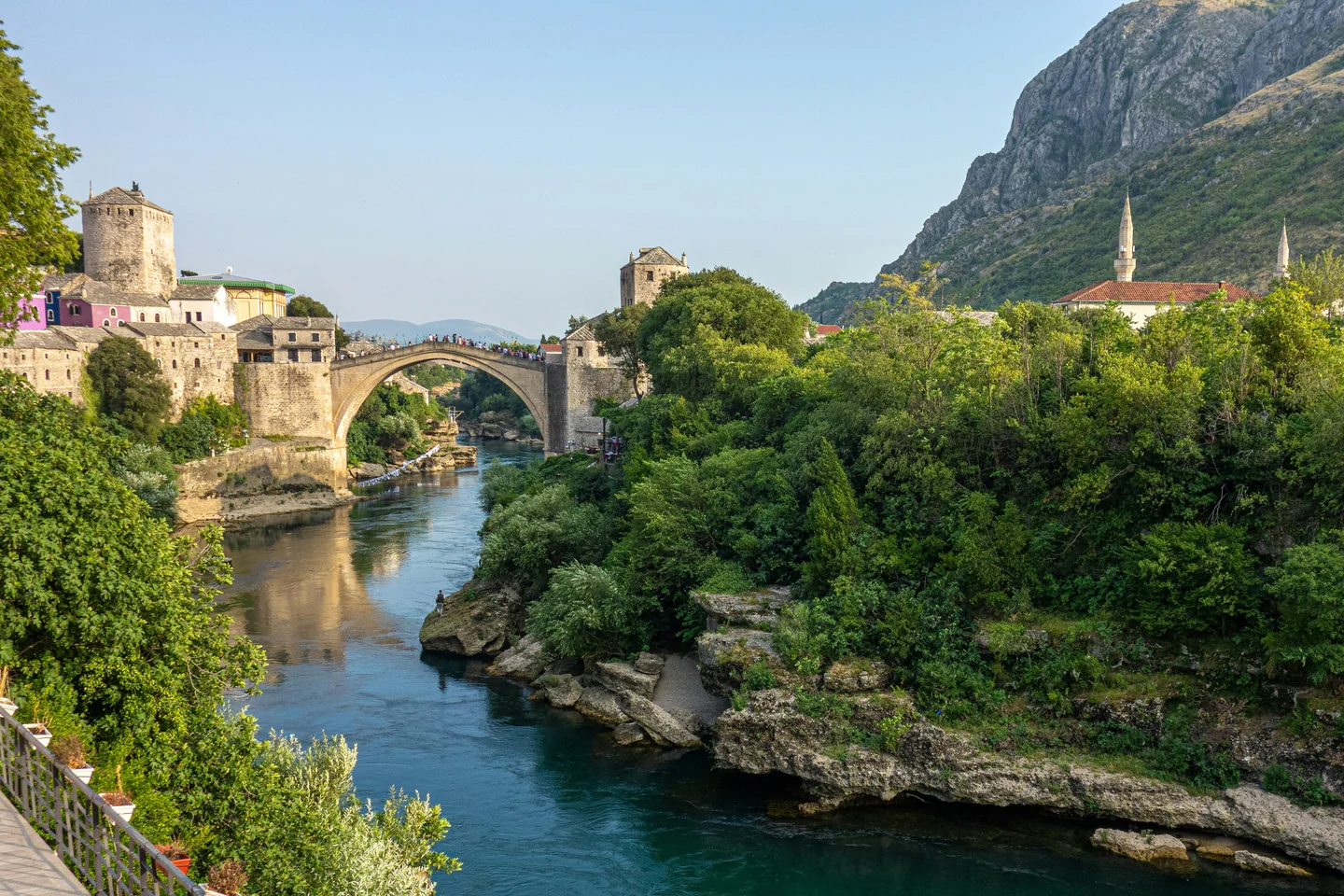
In Mostar, Spanish Square and Rondo put you in different parts of a city visit from the Old Bridge and Kujundžiluk. For Tuzla, the address near Trg slobode, Korzo, Sjenjak or Slatina makes the enquiry clearer. In Zenica, use the coach station, Trg BiH or the named neighbourhood beside the route guide.
Sarajevo: the tram corridor or a neighbourhood bus
Line 3 links Baščaršija and Ilidža. For the railway station, the public catalogue lists line 1 to Baščaršija and line 4 to Ilidža. The tram guide explains the Old Town stops, paper tickets and the different return direction.
For Dobrinja, use the bus guide and commercial line 31e from Vijećnica. It also identifies routes for Podhrastovi, Breka and Jagomir. The Dobrinja journey and an airport-terminal transfer have different endpoints.
GRAS lists a 2.20 KM single for trams, trolleybuses, buses and minibuses, and a 7.10 KM day ticket. Its kiosks include Baščaršija, Ilidža, Stup underpass, Dobrinja terminal and Otoka trolleybus terminal. Ask which journeys the day ticket covers; it is not a pass across every operator.
Centrotrans’s 31e single is 2.70 KM; monthly passes are excluded. On its buses, use a cash single, tap a physical CentroCard or scan the app QR code on entry. Keep the operator and product together when budgeting.
Mostar: a planned city ride or Blagaj outing
The Mostar guide covers line 1 to Ilići and line 10 to Blagaj. The operator’s September table separates weekdays and Saturday, with no Sunday or holiday service for those lines. Plan the outward and return for the day you want.
The city day ticket is 6.50 KM across the city zones. For Blagaj, two Zone II singles total 5 KM; a day ticket becomes useful with more rides. Railway-station and Ulica kralja Tomislava sales points provide a way to buy the appropriate product before boarding.
Banja Luka, Tuzla and Zenica
For a Banja Luka coach arrival, the bus guide covers the station terminus, return direction and weekday or weekend table.
Tuzla’s Ka and Kb loops start at Siporeks and pass the same named points in different orders. The Tuzla guide explains the choice and the unresolved Friday return.
For Zenica, give the destination and travel day alongside the operator’s city-transport page. The city guide distinguishes boarding places; the older hospital-origin examples need a current operator answer.
The last leg can change the transport choice
Save the return stop and the room’s entrance address for a city outing. With several cases, an early departure or a passenger needing boarding help, compare that public route with the direct-ride option. Include the stop-to-room journey in the choice.
For boarding help, the stop approach, vehicle and assistance need to work together. The accessibility guide helps prepare that enquiry; paper and electronic tickets have their own boarding steps.
The small things that make a ride easier
Have small KM cash and the operator’s ticket ready. Buy or validate it as that product requires and retain it for inspection. A transport card, bank card and intercity phone ticket are different products.
Let passengers off before boarding, keep bags clear of the doors and follow priority-seat signs. Keep valuables secure when the vehicle or stop is crowded. For a late return, use the actual final departure.
For luggage or a journey outside the useful timetable, prepare a transfer request. Include the pickup, destination and return so any provider’s proposal can be compared with the local bus or tram.