
Skip to content
Plan my trip

Second World War museums and memorials

A meeting room, bridge remains, a wall of names and a monument in a mountain valley tell different stories. Jajce, Jablanica, Mrakovica and Tjentište are worthwhile for the history and remembrance they hold. Begin with the subject you want to understand, then give its museum or memorial a proper visit.

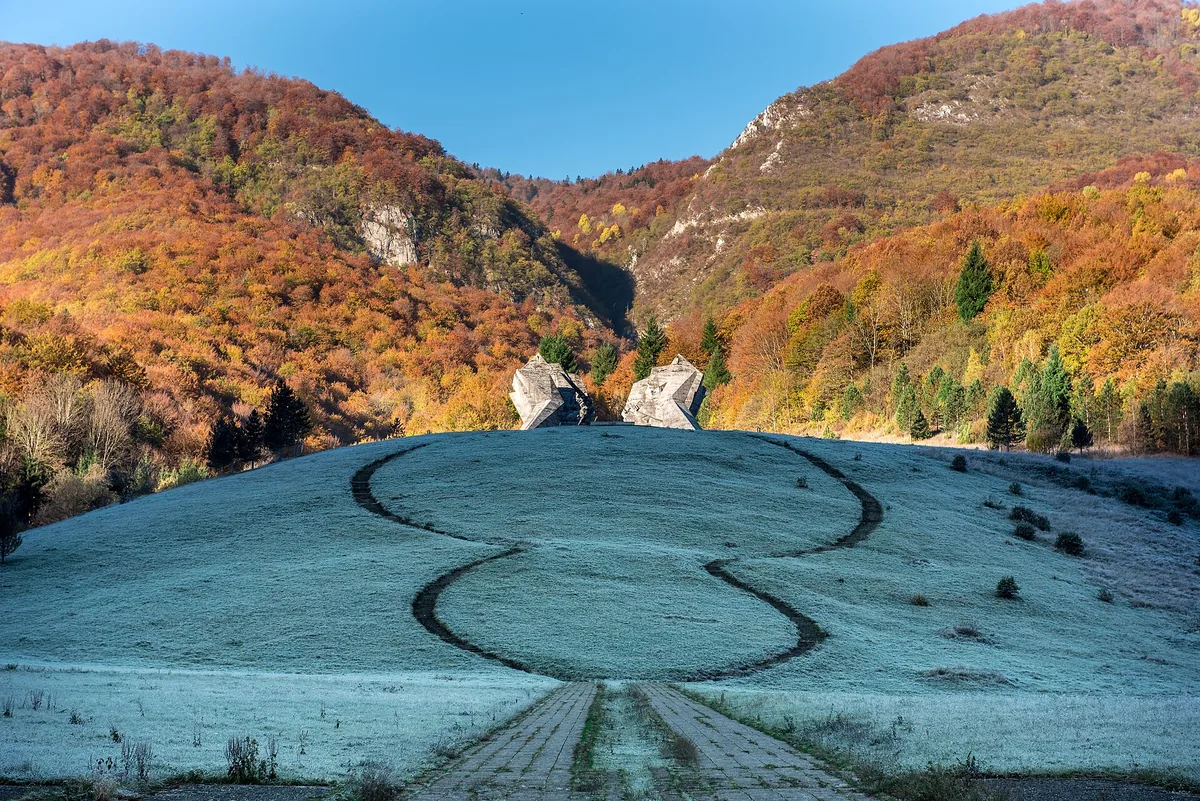
The Battle of Sutjeska memorial at Tjentište

Jajce – The decisions of the 1943 assembly

AVNOJ was the Anti-Fascist Council for the National Liberation of Yugoslavia. In 1943, the assembly adopted a decision to organise Yugoslavia on a federal basis. At the Museum of the Second Session of AVNOJ, the reconstructed meeting room and original documents put those decisions at the centre of the visit.

The museum publishes curator-led interpretation in Bosnian and English for groups, with at least three days’ notice. Its visitor page is useful when planning that session. The waterfall nearby can fill another part of the day; for a second day, the Pliva lakes and Mlinčići mills change the pace and subject.

Jablanica – The wounded, the crossing and the film

The Museum of the Battle for the Wounded on the Neretva gives the 1943 battle its context before you look at the river and bridge. The remains also belong to a later story: after wartime destruction and rebuilding, the bridge was demolished again in 1968 for the film. Looking at the ruin alone would miss that distinction.

Jablanica offers a guide through the exhibits or a visit covering the wider memorial complex. The first keeps the focus on the displays; the second brings the crossing and outdoor setting into the interpretation. Audio guides and tactile exhibits are available, though some exhibitions and toilets are not fully adapted for wheelchair users. Discuss the route through the museum if that affects your party.
Mrakovica – Monument, names and museum

On Kozara, the monument and memorial wall were unveiled in 1972; the museum followed in 1973. Spend time with the names and interpretation as well as the architecture. The wall commemorates partisans, so it should not be read as a complete roll of every civilian and combatant lost in the wider history.

After the history visit, the park’s 3.4 km circuit offers a woodland walk around the memorial zone, with interpretation panels along the way. It is an optional part of the day. For a party with mobility needs, the park’s advice about the route matters more than the distance alone.

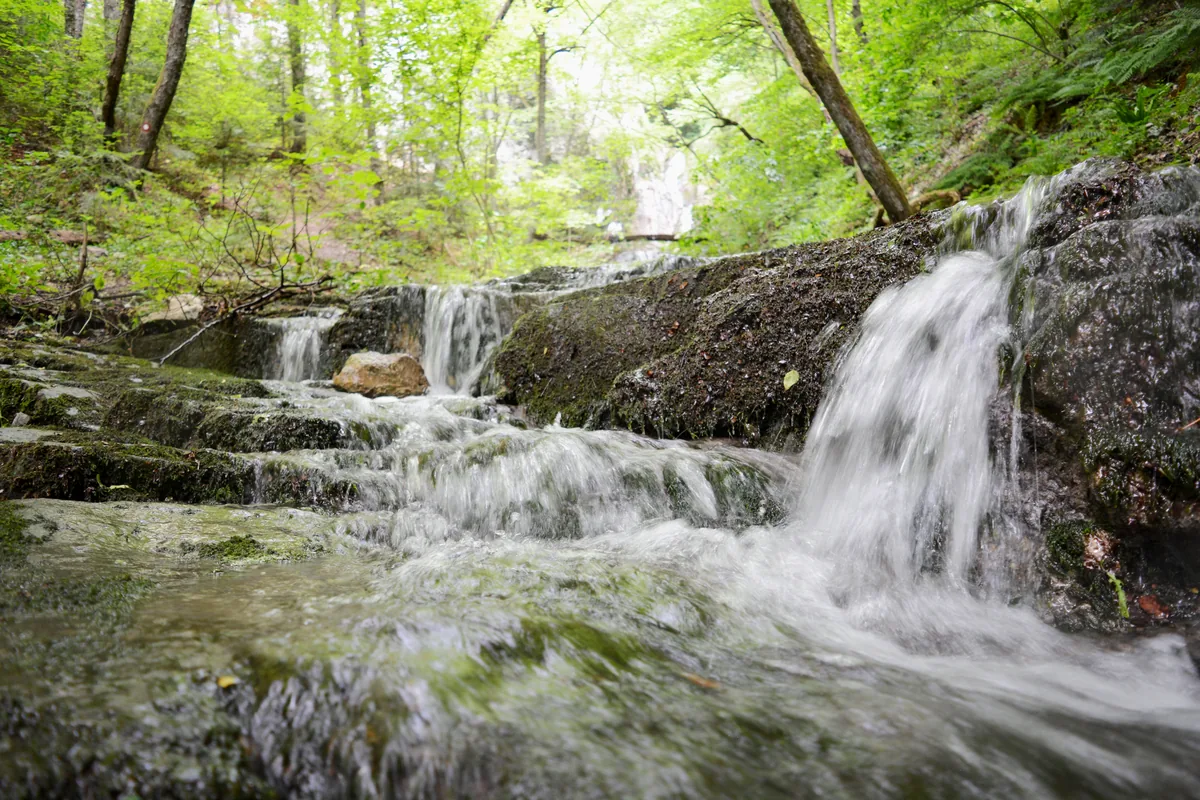
A forest stream and cascades in Kozara National Park
A forest stream and cascades in Kozara National Park Photo: Ljubica K-R

Tjentište – Sutjeska’s memorial landscape

At Tjentište, the Battle of Sutjeska memorial commemorates the 1943 battle. Its outdoor monument and the frescoes in the commemorative interior offer different ways of engaging with the battle. Interior opening and interpretation need the park’s own arrangement; they should not be assumed from access to the outside monument.

An overnight stay nearby puts the memorial before the next day’s travel or mountain outing. A Zelengora lake, Perućica or Maglić then has its own route and demands. The Sutjeska guide separates those options from the memorial visit.

Drvar and Mostar · further memorial choices

Tito’s Cave in Drvar adds the story of the Partisan headquarters in 1944 and the German airborne attack that May. If it is a priority for your trip, contact the local visitor office about the present entrance and museum arrangements before fitting it into the western route. It would extend the six-day outline rather than sit between its existing museum appointments.

Mostar’s Partisan Memorial Cemetery gives remembrance a place within a city stay. Current access and site condition need local visitor information before you go; leave the visit out of a fixed timetable until that is clear. Keep it separate from the Old Bridge’s history, and follow the site’s directions around the graves and memorial structures.

Regional visits or a six-day route

Jablanica and Tjentište form a southern sequence; Jajce and Kozara belong to a western one. The six-day Second World War itinerary links both, starting in Sarajevo and finishing in Banja Luka. For a shorter stay, one regional section leaves more room for interpretation than a faster version of the whole journey.

Keep these subjects distinct from the 1914 assassination and the wars of the 1990s when discussing a guided visit. Follow photography instructions, leave monuments undisturbed and give ceremonies or private acts of remembrance space. Ask how the wartime events and later acts of commemoration are presented together.

In hot weather, keep exposed memorial walks to the cooler part of the day and leave time for water and a break. In winter, shorten the outdoor programme to fit the daylight and check the road and site conditions before leaving your base. Museum opening and an outdoor monument’s accessibility are separate questions.

Landmines and unexploded weapons remain a risk in some rural areas. Follow local warnings and do not leave roads or paved areas without an experienced guide. Open ground or a visible path is not evidence that an area has been cleared.

A visit built around interpretation

Prepare an experience request for a guided historical visit, describing the museum or memorial, language and questions that matter to you. Put the visits and overnight stops in a transfer outline so the journeys allow time for each subject. If you prefer to drive between sites, the car-rental guide helps you prepare a car-hire request.

For the southern part of the route, compare a Sarajevo base at the start with a Mostar stay around the Jablanica leg. For the western part, the Banja Luka stay guide helps compare a city evening with the next day’s Kozara outing; record your accommodation requirements around Jajce in a stay outline.