
Skip to content
Plan my trip

Tuzla

Tuzla works as a city break even when you are not swimming. Its squares introduce the salt story, the gallery and regional museum give you two different indoor visits, and Kapija asks for a quieter part of the day. In the bathing season, an extra night gives Panonika a day of its own.

The Pannonian Lakes in Tuzla

The two squares tell different parts of the story

Begin at Trg Slobode, where the central fountain carries ornaments from stećci, Bosnia and Herzegovina’s medieval stone tombstones. Around it, the reconstructed Barok building and Ottoman-era features place different periods within the same square. It is a useful meeting point before the old-centre streets.

Continue to Soni Trg, the Salt Square. The remains of a salt well and the fountain shaped after a salt-boiling vessel make the city’s defining industry visible. The surrounding narrow streets keep this part of the visit at the scale of a neighbourhood, with time for a café rather than another transfer.

Regional history or portrait art?

The Museum of Eastern Bosnia covers archaeology, ethnology, history, natural heritage and art. Choose it when you want the story of north-eastern Bosnia beyond Tuzla’s salt production. Look at its current exhibitions to see what will be on during your stay.

The International Portrait Gallery has an Ismet Mujezinović collection and an associated atelier, giving visual art a particular local connection. The listed gallery address is 2 tuzlanske brigade 13. Its visitor listing gives weekday hours of 07:30–16:00 and contacts for group visits on weekdays or weekends. A weekend group visit needs that arrangement; the listing does not promise ordinary walk-in weekend opening.

With one day, put the squares and one of those visits together. With two, the other institution can give the second day a purpose outside the bathing season. Check current exhibitions and admission arrangements with each venue.

Kapija and Slana Banja

The Kapija Memorial Centre documents the killing of young people and children on 25 May 1995, through photographs, personal belongings and records. It is at Patriotske lige 5. Give the visit attention appropriate to its subject, with group arrangements through the centre’s listed contacts.

Slana Banja combines walking paths with memorials to the Second World War, the 1992–1995 war and the young people killed at Kapija. It can form a reflective outdoor part of the visit. Leave space around the memorial visit before turning to another part of the day.

A lake day belongs to the season

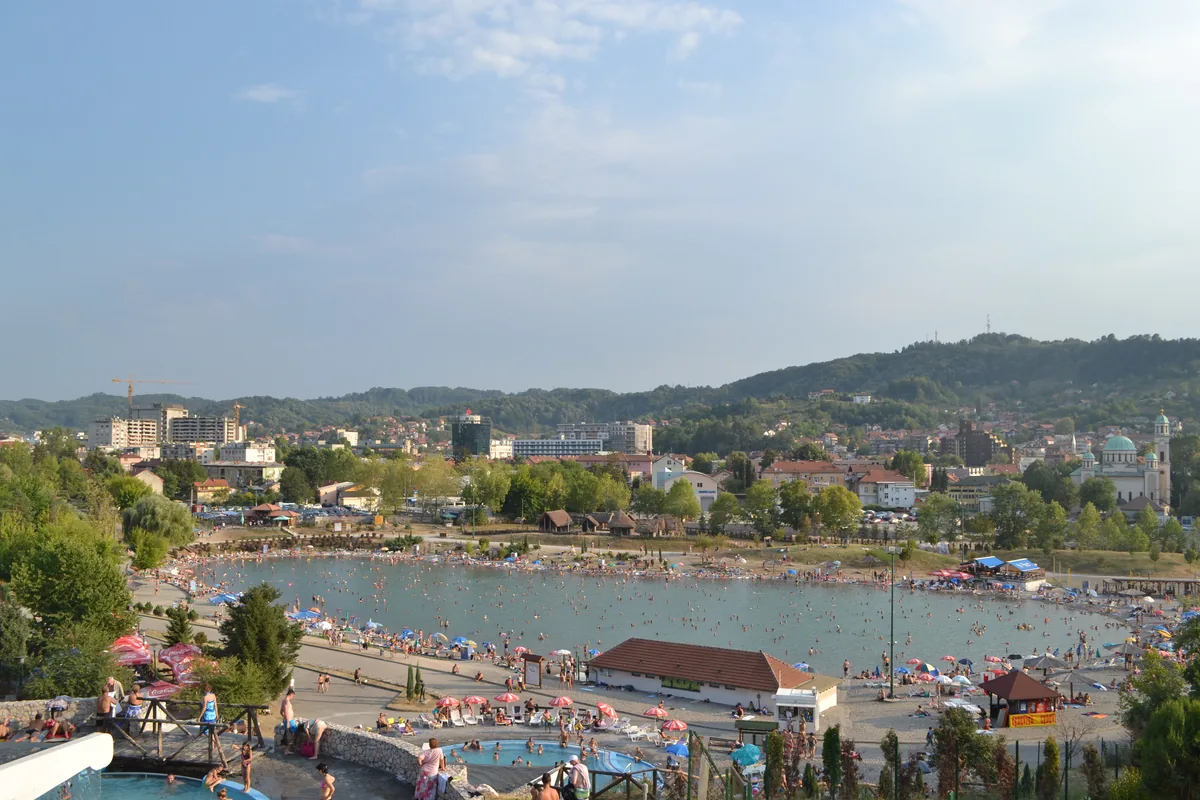
Panonska jezera, also known as Panonika, is the managed saltwater complex with three lakes in the city. It suits a bathing day from a Tuzla base. The operator separates summer arrangements from May and September opening information, so use its seasonal page and dated notices before making swimming the reason for the trip.

Outside the bathing season, the squares and museums give the city day plenty to offer. Access to the lake grounds and their other attractions depends on the operator’s seasonal arrangements. The family-outing guide also distinguishes the lake season from museum and play visits.

The Pannonian Lakes in Tuzla
The Pannonian Lakes in Tuzla Photo: Edinwiki

A base for one day or two

A central room makes sense for repeated time around the squares; a western room serves a different daily journey. The arrival guide keeps the airport and city coach station separate. Drivers can settle the public parking option from the location and zone guide before the city day begins.

For an organised visit, name the cultural stop that matters most and whether bathing belongs in the plan. Those decisions make a trip enquiry more useful than a request to include every attraction.

Add the area you prefer and your room or apartment requirements to a stay outline.