
Safety for city, road and outdoor days
Save the local emergency contacts and prepare for the situations in your itinerary: a crowded tram, a parked car, a rural walk or a river activity. Keep the room address, insurance details and return plan somewhere you can reach if the phone is lost or has no signal.
Belongings in town and in the car
FCDO’s safety advice warns about pickpockets and bag-snatching on public transport and in tourist areas. Keep the passport and phone secure, with bags closed in a crowded vehicle. Avoid displaying large amounts of cash or jewellery.
The advice also highlights theft from cars around Sarajevo, particularly Mount Trebević. Lock the car, hide belongings and take essential documents and valuables with you. Keep the return address somewhere separate from the phone.
Stay on established ground
Landmines and unexploded weapons remain from the 1992–95 war, including in less populated countryside. FCDO advises staying on roads and paved areas unless accompanied by an experienced guide. Road edges, woods, orchards and abandoned buildings need particular care.
An attractive mapped track or a gap in warning signs is not proof of cleared ground. Do not improvise a viewpoint shortcut. For travel beyond paved areas, arrange an experienced local guide and stay on the agreed route; the guide’s presence does not clear an unknown detour.
River outings and waterfall swimming
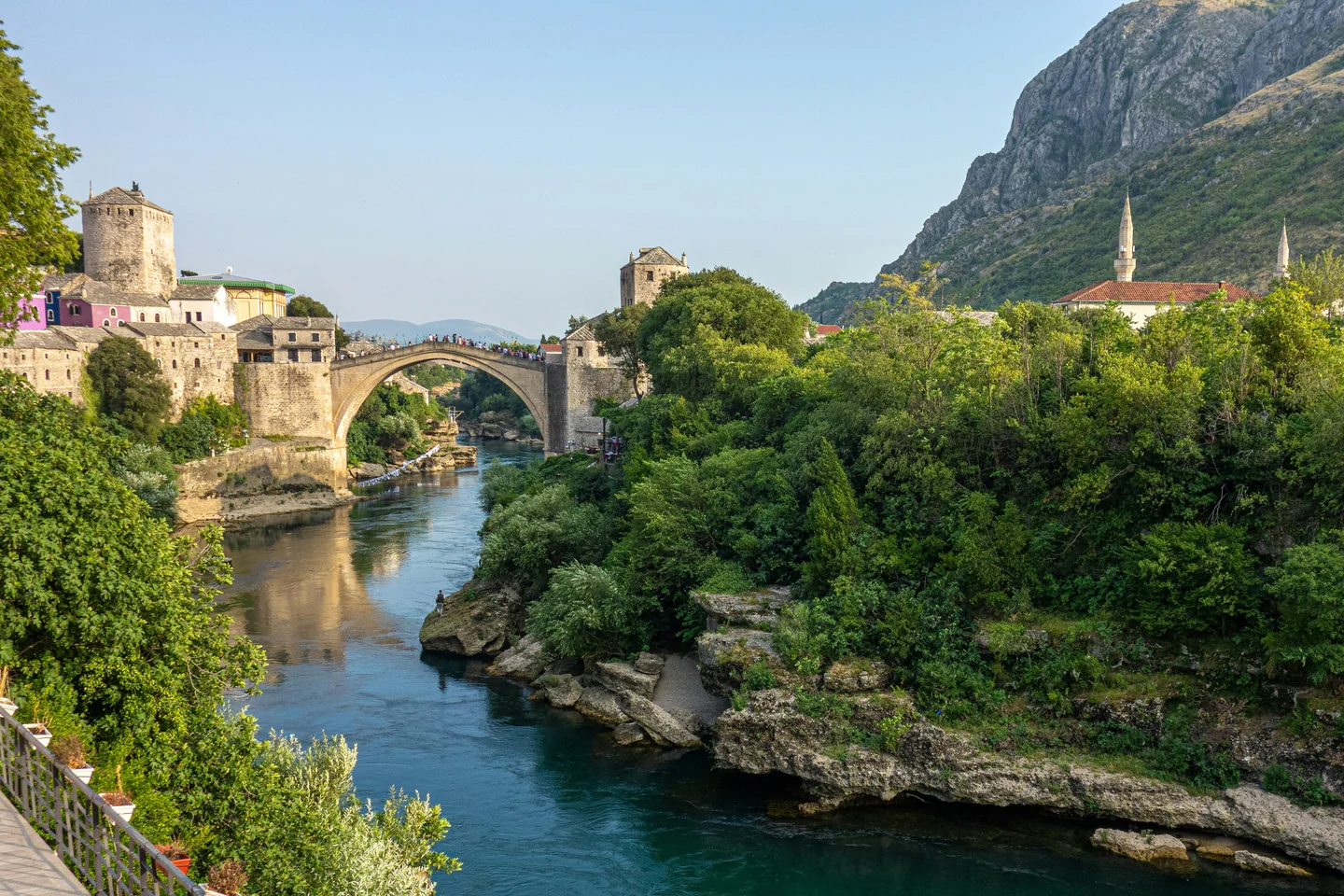
Mostar bridge diving has caused serious injuries and deaths, and FCDO warns of strong currents around rafting routes and waterfalls. Watch a jump without copying it. For a river activity, the section, leader, equipment and conditions must suit the party.
Una’s rules restrict swimming to designated places while visitor zones are open, prohibit it within 50 m of waterfalls upstream or downstream, and forbid walking on travertine barriers. A beautiful bank is not automatically a swimming place.
When a road or gathering changes the day
Read BIHAMK’s report for the road you intend to use. A closure may be a reason to shorten the outing, rather than divert onto an unsigned track. The road-rules guide covers a different part of preparing to drive.
Avoid planned political demonstrations and move away from a gathering if needed. Follow police directions during an incident and take another route.
Make the location clear when calling for help
The published numbers are police 122, fire 123 and ambulance 124. Give the town or road, direction, nearest named place, what happened and how many people need help. A saved address or map pin can make the location clearer. If the call does not connect, ask someone nearby, such as hotel or café staff, to call for you.
BIHAMK roadside assistance is 1282, separate from police or ambulance help. Contact your insurer or operator after urgent local help is under way. Save the emergency details and insurance contacts offline.
Before a rural day, save the plan
Tell your host or another person the route and expected return, especially for a mountain or river day. Keep the room address, party contacts, weather information and battery reserve with the offline map. Change the outing when heavy rain, flooding, fire or snow makes the intended route unsuitable.
BHMAC’s official site links mine information and Android and iOS map apps. A blank area on a map is not proof of cleared ground. Use the information alongside local route advice and an experienced guide, rather than relying on a phone alert.
A long day and the return journey
Keep passport and insurance copies somewhere you can reach without a single phone, and carry essential medication for the journey. The health guide helps with preparation; your insurance must cover the outdoor activity you plan.
For a late return, use a licensed taxi and agree the fare before setting off. Avoid walking beside an unlit road without a pavement. For a longer journey, prepare a transfer request or read the airport-transfer guide. For an outdoor activity, prepare an experience request; discuss the route, group and required support directly with the activity provider.