
Skip to content
Plan my trip

Austro-Hungarian heritage: Sarajevo and Mostar

Sarajevo’s museums, civic buildings and railway quarter reveal more of the 1878–1918 Austro-Hungarian period than the 1914 assassination alone. Start with a riverfront day, then use a second day for Bistrik or the National Museum. In Mostar, the Gymnasium and City Bath offer a different architectural comparison alongside the older town.

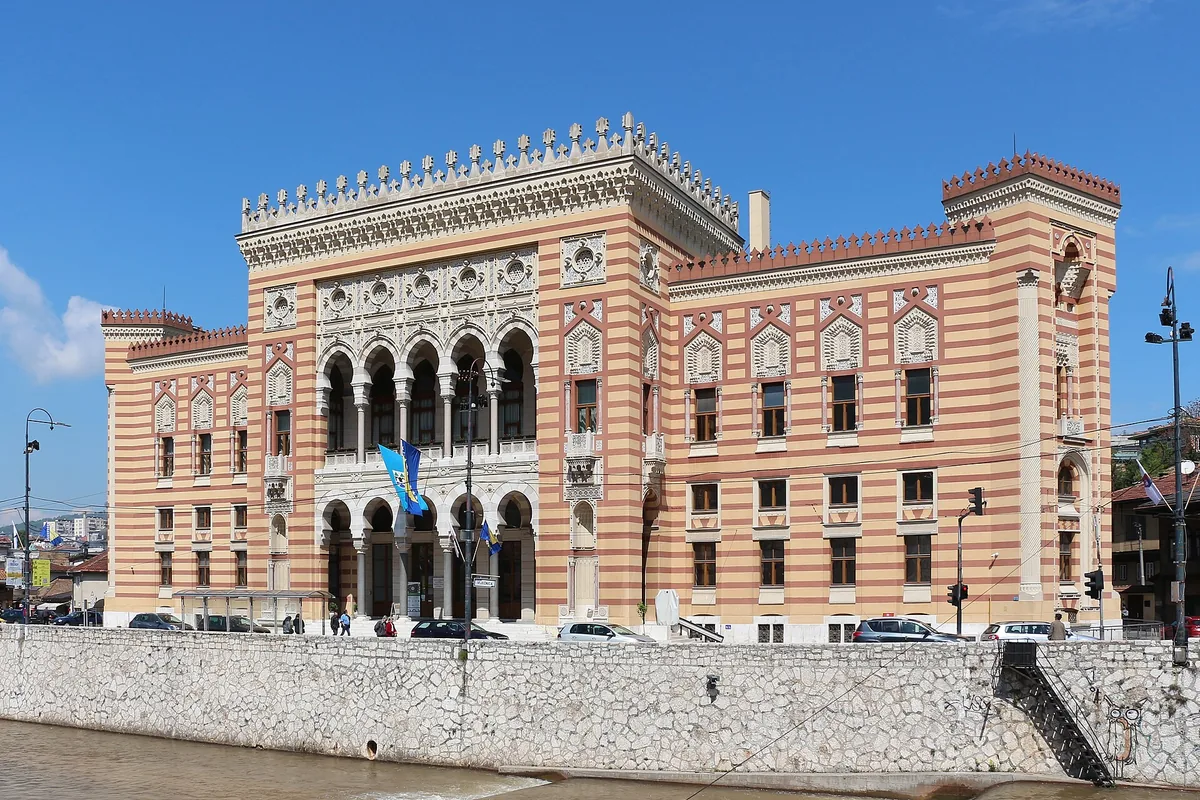
Sarajevo City Hall beside the Miljacka

Begin with the 1878–1918 museum

Museum Sarajevo 1878–1918, at Zelenih beretki 1, provides the historical anchor. Its permanent display organises the period into seventeen themes. Start here if you want the city’s changes and their context.

The museum occupies the former Schiller shop at the corner of Obala Kulina bana and Zelenih beretki, where Franz Ferdinand and Sophie were killed on 28 June 1914. Interpretation and the street setting work together: the nearby Latin Bridge is the landmark by which visitors often locate the event.

A riverfront day: Vijećnica and changing buildings

Vijećnica, Sarajevo’s City Hall, stands beside the old commercial centre. Opened in 1896, damaged by fire in 1992 and reopened after restoration in 2014, it carries later history as well as its Austro-Hungarian architecture. Its visitor information publishes daily 09:00–17:00 opening, with an exception for events.

Continue the architectural thread towards the National Theatre, the main Post Office and the former Evangelical Church, now the Academy of Fine Arts. The riverfront links buildings with different purposes. Their exteriors share a walk; a performance, exhibition or interior visit needs its own arrangement.

One substantial museum visit and this architectural walk can fill the day without making every building compulsory. Vijećnica’s interior and the 1878–1918 museum answer different interests: restored civic space in one, a focused historical display in the other.
Bistrik for railway and industrial history

Across the river, Bistrik offers the railway station, Sarajevo Brewery and the Church of St Anthony. This second-day direction shifts the subject from central civic architecture towards transport, industry and a neighbourhood’s religious building.

Bistrik works as an exterior architectural walk. A visit inside the brewery museum or a tasting would add another subject, so contact the brewery about the spaces and programme available on your date.

The National Museum as a different second day

The National Museum’s neo-Renaissance complex has four pavilions around a botanical garden. This alternative to Bistrik suits a visitor who wants time with collections as well as architecture. Give the museum a substantial part of the day.

The National Museum publishes regular opening hours of 10:00–19:00 Tuesday–Friday and 10:00–18:00 at weekends; it is closed on Monday and certain public holidays. Check its opening information for your date. For a particular exhibition or the Sarajevo Haggadah, contact the museum about viewing arrangements, which can differ from general opening hours.

Marijin Dvor or Ilidža · buildings or a promenade

Marijin Dvor keeps the architecture day in the city. The district takes its name from August Braun’s building, named for his wife, Mary. It is another way to read the expansion of Sarajevo during the period, alongside a substantial National Museum visit.

Ilidža gives the outing a different setting. Velika aleja’s avenue of plane and chestnut trees runs towards Vrelo Bosne; Sarajevo’s tourism board dates the planting of the plane trees to 1892. The Sarajevo-region guide helps give the promenade and springs a separate part of the trip. A Neretva rail-valley journey can extend the theme between cities, but railway stations remain transport facilities; a heritage stop needs a permitted visitor area.

Mostar · the Gymnasium and City Bath

At Spanish Square, Mostar’s Gymnasium shows another approach to Austro-Hungarian public architecture. The tourism board describes its pseudo-Moorish decoration, inspired by the Alhambra. Comparing the exterior with Sarajevo’s Vijećnica gives the second city a clear architectural subject.

The City Bath, built in 1914, adds a public-service building to the Mostar day. Keep these as exterior architecture stops within a Mostar visit; an interior visit would need the institution’s own permission. A Mostar overnight leaves time for the older bridge quarter as a contrast.

Sarajevo: one day or two?

For one day, keep the 1878–1918 museum and central riverfront. For two, take Bistrik’s railway-and-industry direction or the National Museum, according to what interests you. A Sarajevo stay gives the second subject its own morning instead of fitting it around an onward journey.

The Ottoman heritage guide offers a useful contrast in market streets and household life. The periods overlap in later use and alteration of buildings; good interpretation explains those layers.

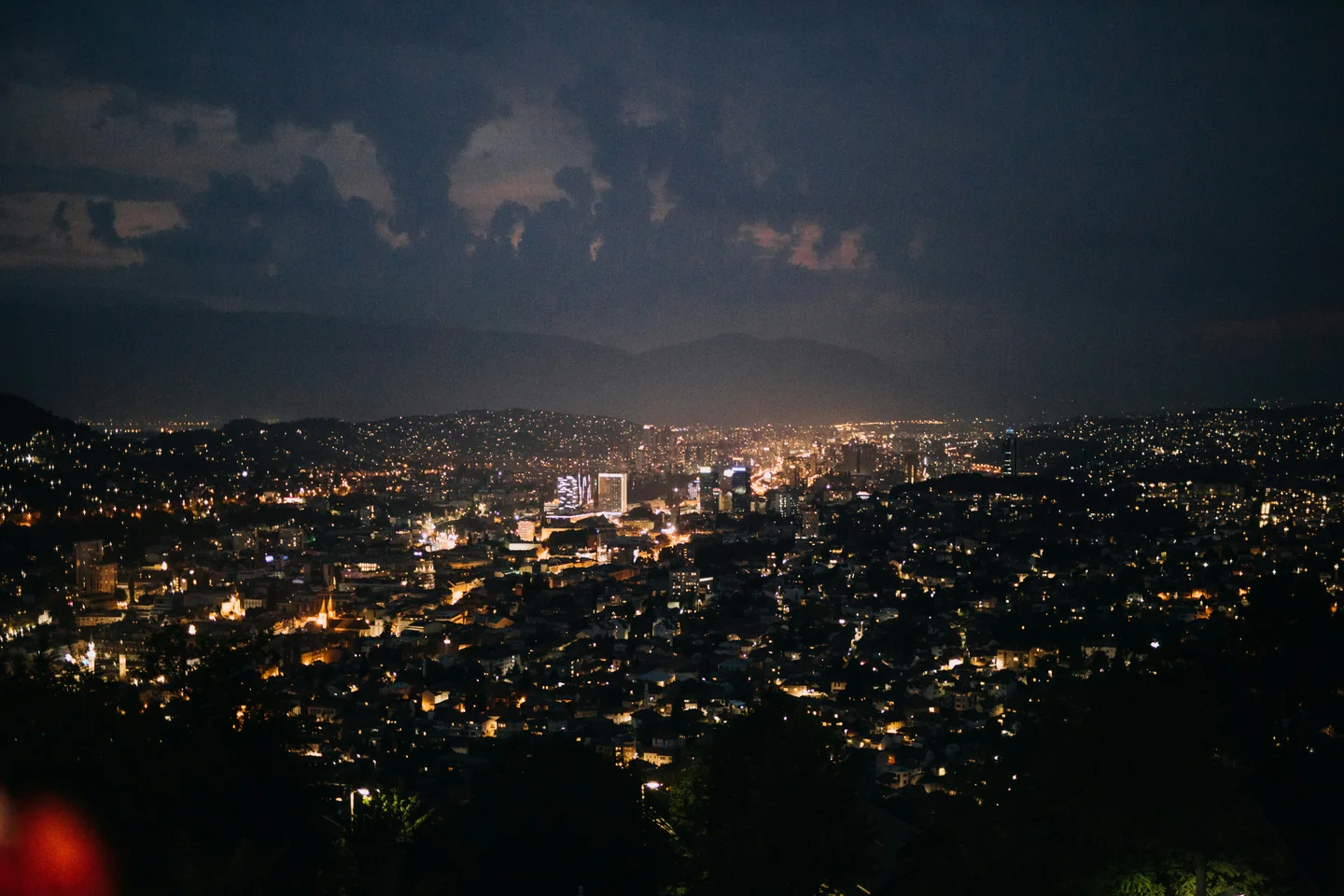
Sarajevo panorama
Sarajevo panorama Photo: Azur Golic

Getting around and finding a guide

For arrival options, start with the airports guide. In Sarajevo, the city transport guide helps plan links between the riverfront, Marijin Dvor and Ilidža. The National Museum’s directions describe a tram approach. Compare car hire if you are adding stops beyond the cities.

For a guided architecture walk, note the buildings or period you want to explore in My Trip. For the journey between Sarajevo and Mostar, compare the transport options. If you prefer a private car and driver, save the stops and final address to discuss with your chosen provider. My Trip lets you review and download the plan; it does not contact providers.

On hot days, put longer outdoor walks early or late and leave room for a shaded break. For winter trips, keep exterior stops within daylight and check museum hours before setting out. Wear shoes with grip for stone paving, especially after rain.