
Skip to content
Plan my trip

Trebinje

Give Trebinje a full city day, then decide whether a second day belongs to a monastery, a winery or Vjetrenica Cave. The Old Town, museum and river make a worthwhile visit in their own right. Staying overnight also gives you an evening here after the sightseeing has finished.

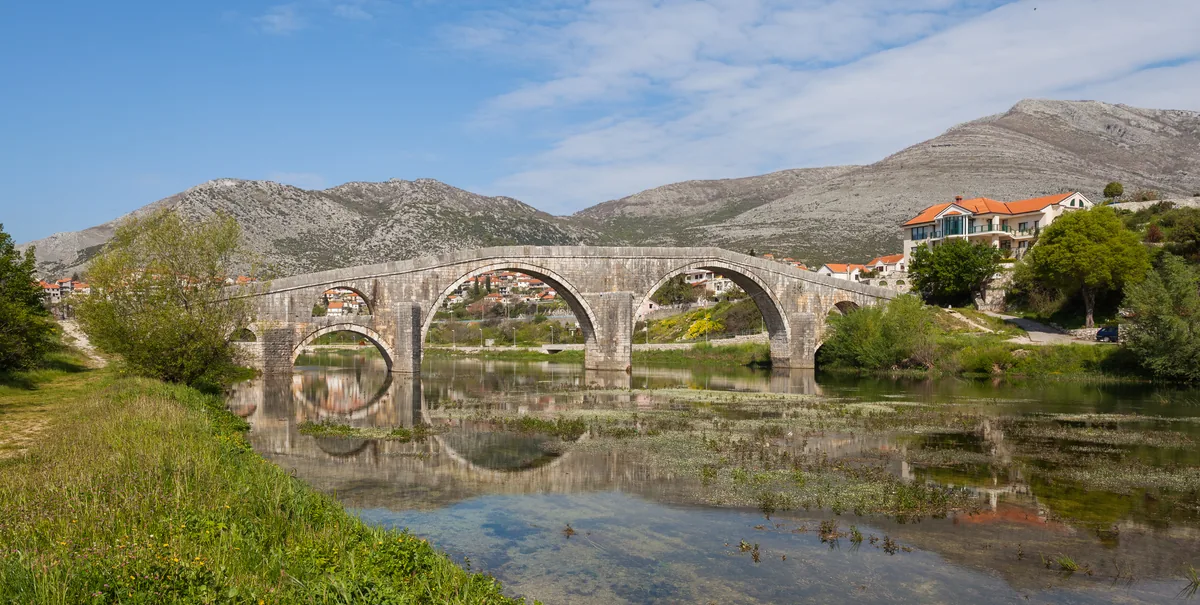
Arslanagić Bridge over the Trebišnjica in Trebinje

Begin with the Old Town and Platani

Trebinje’s walled Old Town sits on the right bank of the Trebišnjica. The Sultan Ahmed and Osman Pasha mosques and the clock tower belong to its Ottoman history. The lanes make a good first walk; visiting inside a mosque depends on its visitor arrangements.

Platani, the plane-tree terrace in the centre, is a natural pause between the Old Town and the rest of the day. It is described locally as a summer garden, with the trees providing shade in hot weather. For a winter visit, make a café stop part of the plan without relying on the summer terrace being in use.

The museum gives the town its context

The Museum of Herzegovina at Stari Grad 59 brings together archaeology, ethnology and art. The Jovan Dučić collection adds a particular Trebinje story: the poet and diplomat’s legacy sits alongside the wider region’s history. Make this the main indoor visit.

The tourism board lists weekday hours of 08:00–20:00, Saturday 10:00–20:00 and Sunday 14:00–20:00. On Sunday, put the Old Town and river before the museum. The museum listing carries the contact for holiday changes and admission arrangements.

Two different views of Trebinje

Follow the river towards the Perović, also known as Arslanagić, Bridge. The bridge was dismantled and moved as a hydropower project changed its original setting. Its present place on the Trebišnjica makes the river walk a useful extension of the Old Town day.

Hercegovačka Gračanica is a separate outing on Crkvina hill. The church was completed in 2000, when Dučić’s remains were brought back to Trebinje. The hill gives you the broader view of the town; the museum gives you more of the story. Include both if they interest you, without treating the hill visit as part of the short central walk.

Arslanagić Bridge over the Trebišnjica in Trebinje
Arslanagić Bridge over the Trebišnjica in Trebinje Photo: Diego Delso

A second day · Tvrdoš or a winery

Tvrdoš Monastery is about 5 km west of Trebinje, on the right bank of the Trebišnjica. Its church and wine tradition are two reasons to visit, but a church visit does not include a cellar tasting. Settle the tasting arrangement separately if wine is the purpose of the outing.

For a wine outing, the Herzegovina Wine Route lists producers around Trebinje. Choose a cellar that can receive you on your dates, confirm the visitor venue and arrange a return that leaves the driver free of alcohol.

The food and wine guide also brings the green market and Herceg House into the city day. You do not need a tasting itinerary to try some of Herzegovina’s food.

Vjetrenica is its own outing

Vjetrenica Cave is near Zavala in the Ravno area, away from Trebinje’s town sights. The operator describes a guided visit of 40–60 minutes, with entry times that change by season. Its entry schedule should shape the journey there and back.

The cave advice calls for long trousers and hiking footwear and does not recommend a visit for children under four, people with claustrophobia or people with mobility difficulties. These are material differences from a city stroll. Use the operator’s visitor information when deciding whether the outing suits your party.

Choosing the base

Stay centrally for the Old Town, museum and evenings on foot; choose an out-of-town hotel when its facilities are part of the reason for staying. The stay guide makes that distinction. For a longer trip enquiry, give Trebinje its own nights and name the one outing you most want, alongside the next base.

Add the area you prefer and your room or apartment requirements to a stay outline.